Retro Geometric Digital Paper: Your All-Purpose Creative Ally
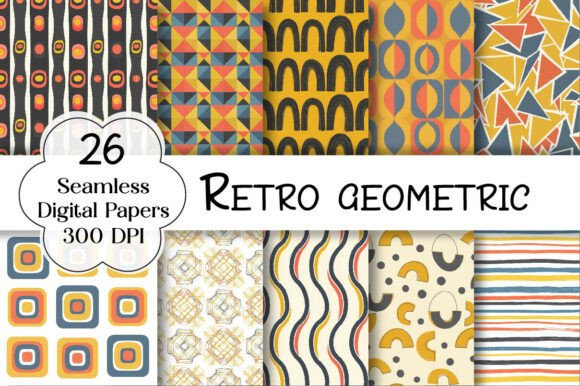
In a world saturated with complex design tools, sometimes the most powerful creative catalyst is a single, versatile asset. Retro geometric digital paper is precisely that. It's a high-resolution digital file featuring clean, repeating patterns of shapes like triangles, circles, and hexagons, often styled with nostalgic color palettes. This isn't just a decorative background; it's a foundational design element. Its true power lies not in its aesthetic alone, but in its incredible adaptability across both physical and digital projects.
Whether you’re a hobbyist crafting a custom tote bag, a blogger needing a consistent visual theme, or a small business owner designing product labels, this type of digital paper can streamline your process and elevate your results. However, to truly unleash its potential, you need to approach it with a bit of savvy. Many creators, from beginners to seasoned professionals, stumble on a few common points that can limit their success or lead to frustration.
Assuming All Digital Paper Is Created Equal
The most frequent oversight is treating "digital paper" as a generic category. You might download a file, excited to print it for a mug or use it in a digital presentation, only to find the image is pixelated or the colors are washed out. The root cause is usually a mismatch between the file’s specifications and your intended use. A design labeled as "retro geometric digital paper" could be a low-resolution web graphic unsuitable for print.
How this affects you: Using a low-resolution file for sublimation printing on a t-shirt results in a blurry, unprofessional final product. Using a file with an incorrect color profile (like RGB for a CMYK print process) can lead to dull, inaccurate colors, ruining that vibrant retro palette you paid for.
A better approach: Before you download or purchase, always verify the technical details. The key specification is DPI (dots per inch). For any physical printing or high-quality craft project—like creating wind spinner designs, candle labels, or scrapbook decoupage—you need a file at 300 DPI. Also, check if the provider offers files in both RGB (for digital screens) and CMYK (for professional printing) formats. This small step ensures your design looks sharp and vibrant everywhere you apply it.
Overlooking the Importance of a Seamless Pattern
The term "seamless" in the description isn’t just a buzzword; it’s a critical functional feature. A seamless retro geometric pattern means it tiles perfectly without visible edges or breaks. Some designers might overlook this, choosing a file where the pattern visibly repeats in a jarring way.
How this affects you: If you’re using the paper as a background for your website imagery or across a large surface like party tablecloth decals, a non-seamless pattern creates obvious grid lines and disrupts the visual flow. It makes the design look amateurish and defeats the goal of a coordinated, polished theme for events like weddings or bridal showers.
A better approach: Test the file before committing to a large project. Open it in your graphic software (even a basic one) and duplicate the tile side-by-side. You should see a continuous, uninterrupted field of geometry. This quality is essential for applications like wallpapers, book covers, and expansive DIY project backgrounds where a flawless repeat is paramount.
Misjudging Scale and Application Compatibility
That charming geometric pattern might look perfect on a mockup for a phone case, but scaling it down for a playing card or up for a tote bag requires consideration. A dense, intricate pattern can become muddy when printed small, while a simple, large-scale geometric design might lack detail when used for something like mini junk journal pages.
Practical advice: Think about your dominant use case before selecting a specific retro geometric design. If you plan to use it across many items—from social media graphics (small) to pillow covers (large)—look for a pattern that has a balanced level of detail. It should have clear shapes that remain identifiable at different sizes. Many savvy providers offer previews of the pattern applied to various products, which is an invaluable visual guide.
Treating It as a Static Element Without Customization
A common creative limitation is using the digital paper as-is, like a fixed wallpaper. The retro geometric design is a starting point, not a finish line. Its clean shapes and defined colors are perfect for further personalization.
Realistic example: Instead of just placing the pattern behind text on a birthday invitation, use the geometric shapes as clipping masks for photos, or selectively recolor certain elements within the pattern file using your software to match a specific party color scheme. For KDP book covers, overlay transparent text boxes or blend the pattern with other subtle textures to create something uniquely yours.
What to do: Ensure you acquire the file in a format you can edit, such as PNG with a transparent background or, ideally, a layered PSD file if offered. This allows you to isolate elements, adjust colors, and integrate the pattern dynamically with other design components for your planner, handmade stationery, or digital presentations.
Neglecting the Legal and Practical Usage Terms
Finally, in the rush to create, people often forget to check the license or usage terms associated with the retro geometric digital paper. Is it for personal use only? Does a commercial license allow you to sell physical products like mugs and t-shirts? This is especially crucial for entrepreneurs and small business owners.
How this affects results: Using a personal-use design for your candle label business could lead to legal disputes and damage your brand’s reputation. Conversely, paying for a full commercial license when you only need to make a few scrapbooks for friends is an unnecessary cost.
Constructive solution: Always read the license description provided by the designer or marketplace. Look for clear terms regarding "personal," "commercial," or "extended commercial" use. A quality asset will have this clearly stated. For maximum versatility across crafts, small business products, and digital marketing, investing in a commercial-use license from the start is often the most prudent and stress-free choice.
By paying attention to these practical details—resolution, seamlessness, scale, customization potential, and license—you transform a simple download into a reliable, multi-purpose creative partner. This retro geometric digital paper becomes the consistent visual thread that can tie together your brand, elevate your crafts, and add a touch of coordinated aplomb to every project, from your next festive party decoration to your professional website imagery. It’s about making one smart choice that empowers a thousand creative decisions.